Teaching Methodology
At Tamanna Special School, Toranagallu, we believe that no two children learn the same way — and no child should ever be made to feel that their way of learning is wrong.
Our teaching methodology is built on one foundational truth: when learning feels safe, joyful, and meaningful, every child grows.
Guided by this belief, and enriched through our knowledge partnership with specialists in learning differences and child development — our approach weaves together three powerful pillars:
🌱 Activity-Based Learning
Learning at Tamanna happens through doing. Rather than passive instruction, our educators engage children in purposeful, hands-on activities that connect concepts to real-world experiences. Whether it’s sorting, building, matching, or creating, every activity is carefully designed to develop a specific skill — academic, social, motor, or communicative.
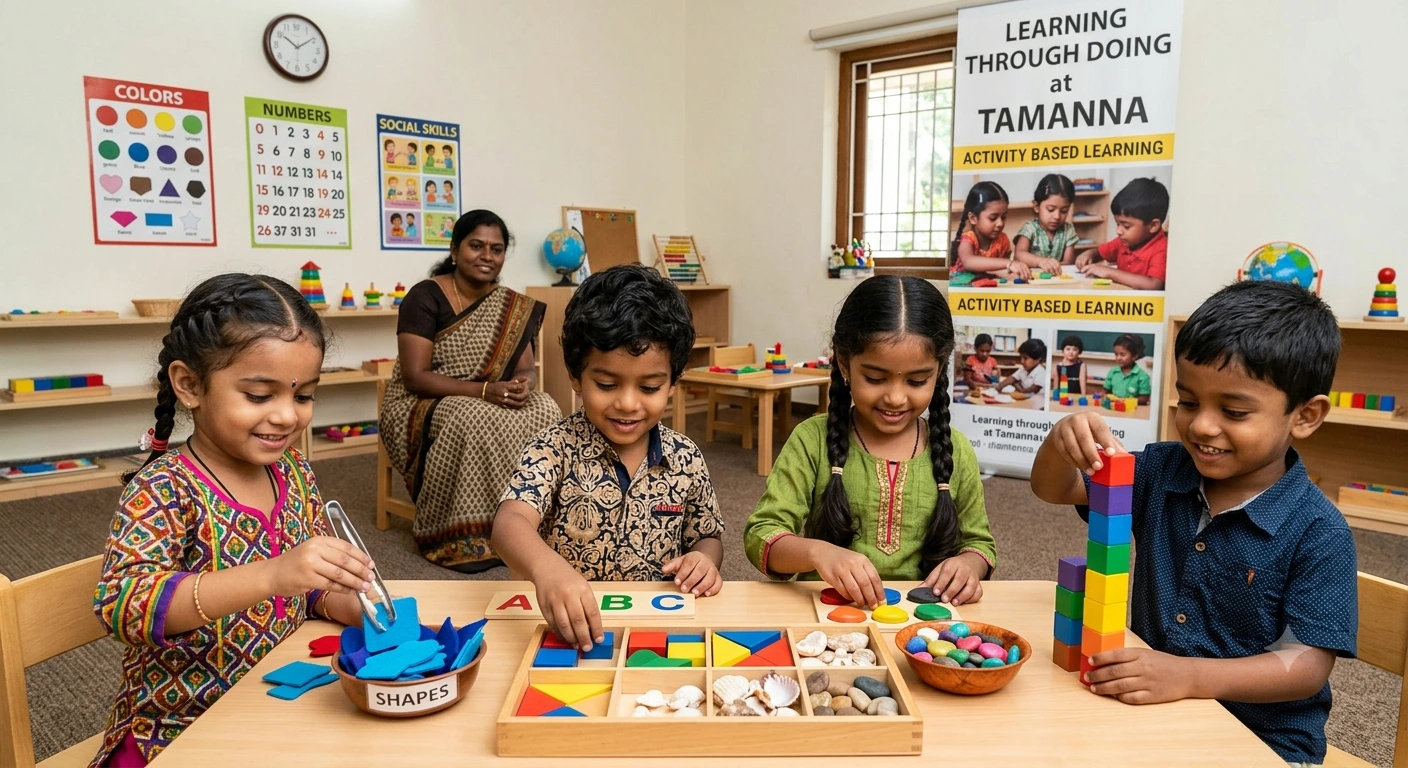
Activity-based learning is especially powerful for children with diverse learning needs. It removes the pressure of performance and replaces it with the pleasure of participation. Children build confidence not by sitting through lessons, but by living through them.
🤝 Interactive Learning
At Tamanna, the classroom is a conversation — not a one-way communication. Our specially trained educators engage each child through continuous two-way interaction: asking, listening, observing, and responding to every child’s unique cues. Sessions are designed to keep children actively involved at every stage, using visual aids, gesture-based communication, storytelling, and real-time feedback.
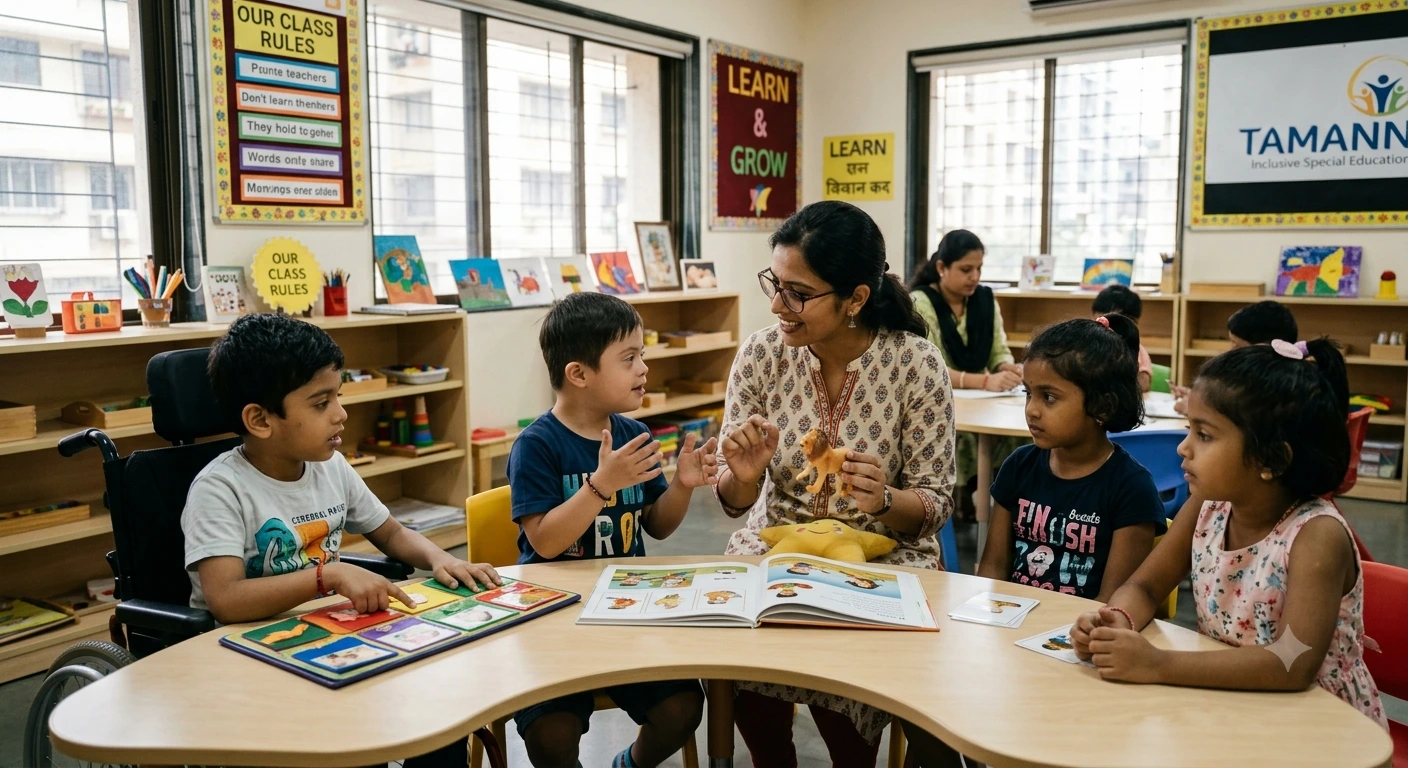
Our interactive frameworks are regularly reviewed and refined to ensure they align with current evidence-based practices in special education. This means our children benefit not just from caring teachers, but from a methodology that is clinically informed and continuously improving.
🎲 Play-Based Learning
Play is a child’s first language — and at Tamanna, we speak it fluently. Our play-based approach recognises that children with special needs learn most naturally when they are engaged, relaxed, and having fun. Structured play, sensory play, role-play, and group games are all integrated into daily routines to develop communication, social skills, emotional regulation, fine motor abilities, and cognitive growth.
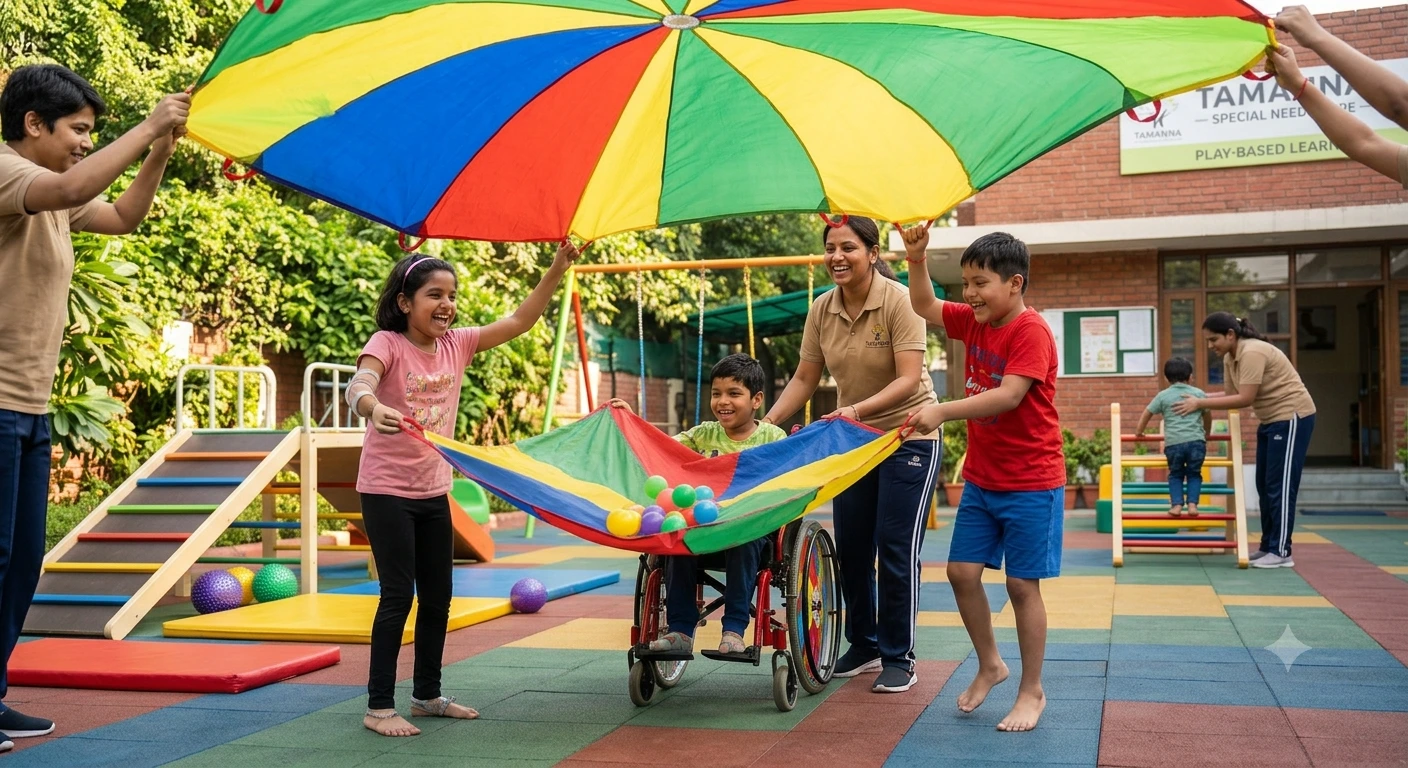
Play-based sessions are not merely recreational — they are purposefully designed therapeutic experiences that build skills without the child ever realising they are being taught.
|
Play in Action — Every Moment is a Lesson |
|
A child stacking blocks is developing spatial reasoning. |
|
A child playing with sand is building tactile tolerance. |
|
A child participating in a puppet show is learning to express emotions. |
🗂️ Individualised At The Core
Underpinning all three pillars is our commitment to Individualised Education Programs (IEPs). Every child at Tamanna is assessed across functional, academic, social, and therapeutic domains, and a personalised learning roadmap is created for them. Goals are reviewed quarterly, and teaching strategies are adapted to match each child’s pace and profile — not the other way around.
Our knowledge partnerships bring additional depth to this process — particularly in identifying learning differences, designing remediation strategies, and supporting families with home extension activities that reinforce what children learn at school.
👨👩👧 A Whole-Community Approach
We believe that great teaching does not end at the classroom door. Our methodology actively involves parents, caregivers, and therapists as equal partners in a child’s progress. Regular parent training sessions, review meetings, and home program guidance ensure that learning continues beyond school hours — and that every adult in a child’s life is equipped to support them.
"At Tamanna, we don’t measure success by how quickly a child catches up.We measure it by how confidently they show up — every single day."